
Why AI Agents Will Change Marketing
Have you ever scrolled through social media or searched online and noticed how fast everything moves, how content feels personal, and how quickly people expect answers? That’s not magic, it’s the power of AI reshaping marketing in 2025 and beyond.
Traditional marketing methods like long campaigns, slow reporting, and generic messaging no longer work. People expect relevant, personalised experiences instantly. This is where AI agents come in. They can analyse huge amounts of data, personalise campaigns for different audiences, and even make decisions automatically. Instead of spending hours checking ad performance or sending follow-up emails manually, AI agents can track results, optimise campaigns, and suggest improvements in real-time. This allows marketing teams to spend less time on repetitive tasks and more on creativity, strategy, and building meaningful client relationships.
Traditional teams face real pressure today. Creating reports, posting content, following up with leads, and analysing campaigns take up huge amounts of time but often don’t add enough value. Clients want results faster, personalised solutions, and constant optimisation.
Relying only on humans slows down delivery, increases chances of mistakes, and hiring more people can get expensive and complicated. AI agents don’t remove the pressure, they shift it. By taking over repetitive and analytical tasks, AI gives teams space to focus on what truly matters: strategy, creativity, and client impact.
In this blog, I’ll explain how AI is transforming digital agencies and why it will play a central role in the next few years. You’ll discover what AI agents do, how they work, and how they take over repetitive tasks without replacing human creativity. I’ll show why traditional teams feel the pressure, how AI solves these challenges, and why the smartest agencies combine human insight with AI efficiency. By the end, you’ll see why embracing AI is no longer optional, how it benefits both teams and clients, and why the future of marketing lies in humans and AI working together.

What Are AI Agents and How Do They Work?
From Automation Tools to Intelligent Agents
AI agents are more than basic automation tools. Traditional automation might send an email at a specific time or post content automatically, but AI agents are “smart helpers.” They can analyse data, make decisions, and take actions without constant human supervision.
Think of them as digital teammates that help you manage marketing work more efficiently. For example, they can personalise content for different audiences, test campaigns, or adjust advertising budgets in real-time based on performance. Unlike simple tools that follow instructions, AI agents can learn from the data they process.
Over time, they get better at understanding what works and what doesn’t. They can spot patterns in customer behaviour, predict outcomes, and optimise campaigns automatically. This means marketing teams can get faster results with less manual effort. In short, AI agents combine speed, intelligence, and learning ability to help agencies perform better and smarter.
Real-World Use Cases in Marketing
AI agents are already being used in many marketing tasks today. They can handle lead generation by identifying potential customers and sending personalised messages. They can optimise ad campaigns by testing different creative, headlines, and audiences automatically. They can schedule social media posts, create content suggestions, and even analyse competitors’ strategies. For customer support, AI agents can answer common questions instantly, freeing human teams to solve more complex issues. Some companies even use AI agents to generate email sequences that convert leads into paying customers.
The beauty of AI agents is that they work 24/7, never get tired, and can handle large amounts of repetitive tasks without mistakes. This doesn’t replace human creativity but enhances it, allowing marketers to focus on big-picture strategy, storytelling, and building client relationships.
How AI Agents Learn and Act
AI agents learn by analysing data. The more information they get, the better they become at predicting what will work. For example, if an AI agent manages ad campaigns, it looks at which ads get clicks, which emails get opened, and which messages lead to sales. Then, it makes adjustments automatically.
Think of it as a junior team member who studies every campaign and makes suggestions, but at a speed and scale no human could match. AI agents can act independently within rules you set. They can decide the best time to post, which audience to target, or which leads to follow up with first. Over time, their actions become smarter and more effective, helping agencies get better results while saving time.

The Problem With Traditional Marketing Teams
Manual Tasks, Slow Processes
Traditional marketing teams spend hours on manual tasks: posting content, tracking campaigns, creating reports, and following up with leads. These tasks take time but don’t always produce strategic insights. Because of this, campaigns often take weeks to launch, and performance analysis is slow. The slow pace affects results and can frustrate clients who expect faster delivery.
Rising Costs and Limited Scalability
Hiring more team members might seem like a solution, but it increases costs and complicates coordination. More people means more training, more communication, and more opportunities for mistakes. Scaling a team is expensive and slow, which limits the agency’s ability to grow quickly.
The Expectation Gap Between Clients & Agencies
Clients today expect fast, personalised marketing results. They want campaigns that are optimised constantly and can adapt in real-time. Traditional teams often struggle to meet these expectations, which creates a gap between what clients want and what agencies can deliver manually.

Why AI Agents Are the Next Big Shift
Data Shows Rapid Adoption Is Already Happening
AI isn’t just a concept, it’s already transforming the marketing world. Studies show that over 70% of agencies and marketing teams are using some form of AI today, from content generation to customer interaction. This rapid adoption highlights that businesses recognize the value of AI in driving efficiency and results. Agencies are no longer waiting; they are experimenting, testing, and implementing AI in real campaigns.
In an ADP workforce survey, around 85% of workers said AI will impact their jobs within the next 2–3 years. That doesn’t mean people will disappear. It means AI will support, manage, or speed up many tasks people do every day.
Other global research firms say similar things. They predict that most jobs will involve AI assistance, even if humans are still making decisions.
So when we say “a large part of work will be managed by AI”, it simply means this:
AI will handle repetitive, time-consuming tasks, while humans focus on thinking, creativity, and decision-making.
AI Agents Make Work Faster and Smarter
One of the biggest advantages of AI agents is their ability to process large amounts of information quickly. They can analyse customer behaviour, test different campaigns, and optimise messaging in minutes, tasks that could take a team days or weeks. By handling repetitive or data-heavy tasks, AI agents free humans to focus on creative and strategic work. This combination of speed and intelligence leads to smarter decisions, faster execution, and better results overall. With AI, agencies can launch campaigns, respond to leads, and adjust strategies in real-time, creating a much more agile marketing process.
Quality Doesn’t Decline, It Evolves
Some worry that AI might reduce quality, but in reality, it enhances it. AI agents provide insights from data patterns humans might miss. They can suggest improvements, optimise content, and even predict what audiences will respond to best. Meanwhile, human teams focus on creativity, storytelling, and emotional connection. This evolution allows agencies to deliver higher-quality campaigns faster, more accurately, and with a better chance of achieving desired outcomes. In other words, AI doesn’t replace human talent; it amplifies it.

How AI Agents Will Replace & Empower Marketing Work
Replacing Repetitive Tasks Not Creativity
AI agents are perfect for repetitive, time-consuming tasks, but they don’t replace creativity. Writing, designing, and strategising still require a human touch. By automating mundane tasks like scheduling posts, sending follow-ups, or analysing data, AI frees humans to focus on the parts that truly matter, creating unique campaigns, engaging with clients, and innovating.
Agents Taking On Complex Multi-Step Workflows
AI agents are smart enough to handle multi-step workflows that previously required several people. For instance, they can track leads, send personalised messages, follow up automatically, and analyse responses. This means a single AI agent can manage tasks that would normally take multiple team members, increasing efficiency without sacrificing accuracy.
Humans Focus on Strategy & Insight
With AI handling operational work, humans can concentrate on higher-level tasks: understanding audiences, planning strategy, and creating content that connects emotionally. This combination ensures campaigns are not only efficient but also impactful. AI handles the “how,” while humans focus on the “why.”
The Hybrid Human + AI Agency Model
Why Agencies Still Matter
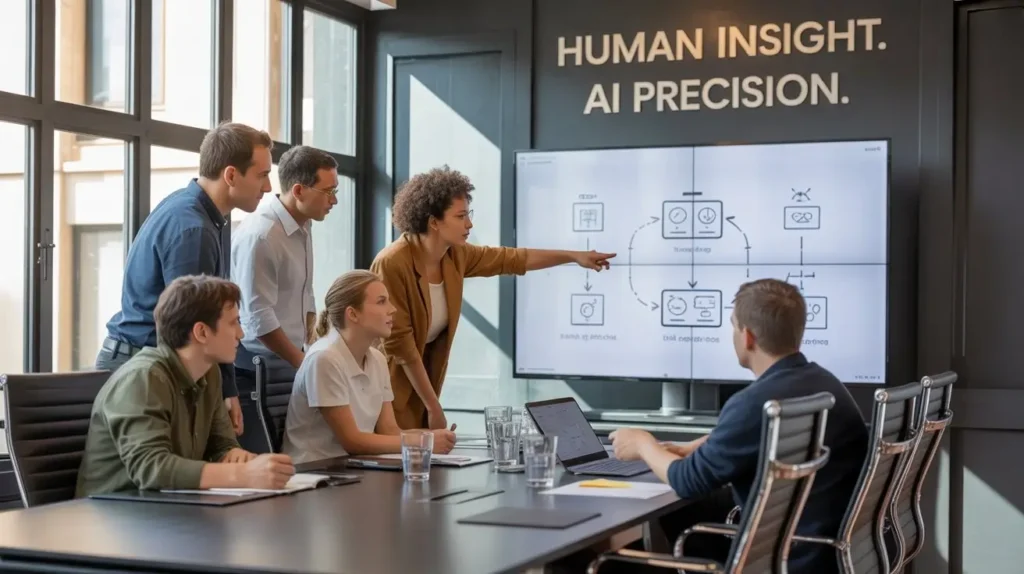
Even as AI becomes essential, agencies still provide value. Humans bring judgement, creativity, and emotional intelligence, qualities AI can’t fully replicate. AI agents improve execution, but agencies are needed to guide strategy, maintain brand voice, and make ethical decisions.
Where Humans Add Value
Humans are vital for building relationships, understanding culture, and connecting emotionally with clients and audiences. They can interpret AI insights, make strategic choices, and add a personal touch that ensures campaigns feel authentic rather than robotic.
Case Examples of Human + AI Collaboration
Some agencies now use AI to handle repetitive tasks like reporting, lead follow-up, or ad testing, while humans focus on strategy and creative ideas. The result? Faster execution, higher-quality campaigns, and satisfied clients. This hybrid approach is already helping agencies scale and perform better without sacrificing human insight.
Challenges Agencies Face in AI Adoption
Technical & Data Barriers
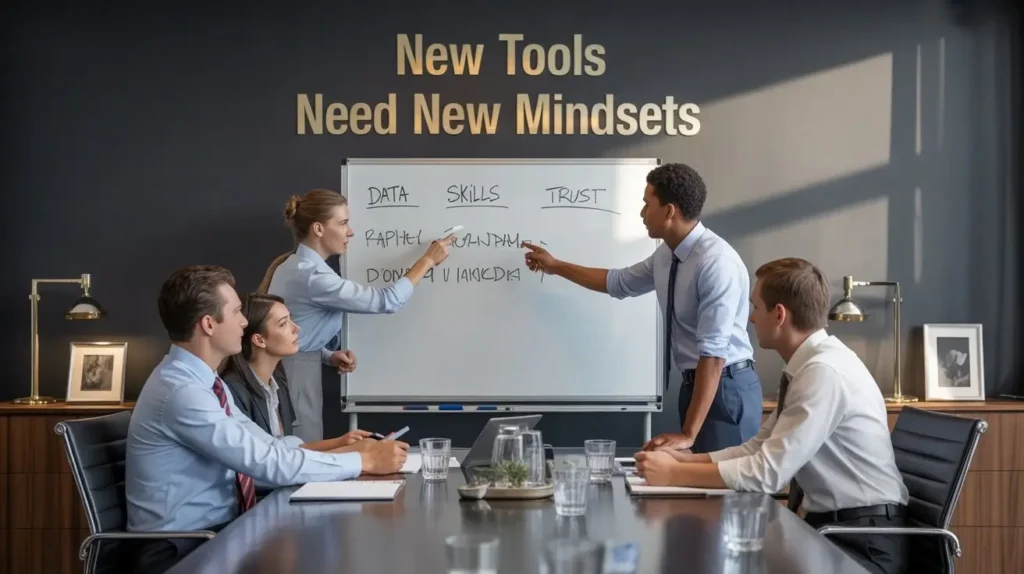
Adopting AI isn’t always easy. Agencies need proper infrastructure, clean data, and compatible systems to implement AI effectively. Without these, AI can underperform or even create errors, which is why planning and setup are crucial.
Skills Gap & Training Needs
AI tools require skills and knowledge. Teams must learn how to interpret AI insights, optimise workflows, and manage AI-driven campaigns. Agencies that invest in training will see the biggest advantage in the coming years.
Ethical & Trust Concerns
AI adoption also brings ethical considerations. Transparency, fairness, and responsible use of data are essential. Clients and audiences must trust that AI decisions are made responsibly. This is where human oversight remains critical.
Conclusion-How Agencies Can Thrive in the Next 3 Years
Embrace AI With Purpose
Agencies that adopt AI thoughtfully will gain speed, efficiency, and better results. Using AI purposefully rather than blindly following trends ensures smarter campaigns and stronger client satisfaction.
Build Human-Centred AI Experiences
The best agencies combine AI efficiency with human insight. Humans focus on strategy, creativity, and client relationships, while AI handles operational and data-heavy tasks. This balance creates campaigns that are both effective and authentic.
The Opportunity and the Road Ahead
The next few years will redefine digital agencies. Those who embrace AI early while keeping humans at the centre will thrive. This is a chance for agencies to work smarter, deliver better results, and build stronger relationships with clients. The future belongs to teams that combine intelligence, creativity, and empathy — human + AI together.