

A Simple Way to Decide What Marketing to Focus on (Without Doing Everything)
If you’re a founder, marketing can feel like constant noise. Every expert says to post more, run ads, start a podcast, build funnels, write emails, optimise SEO, all at the same time. It’s exhausting. You didn’t start your business to become a full-time marketer. You started it to solve real problems and create impact.
This guide will help you slow down and cut through the chaos. It’s not about doing more, chasing every trend, or following every shiny tactic. It’s about deciding what marketing actually deserves your focus right now. When you know where to put your energy, marketing stops feeling overwhelming and becomes clearer, calmer, and far more effective.
Why Marketing Feels Overwhelming for Founders
Too Many Options, Too Little Time
You’re not overwhelmed because you lack discipline. You’re overwhelmed because modern marketing never stops expanding. Every week there’s a new platform, new tactic, new tool, new update. LinkedIn says one thing. Instagram says another. Google recommends SEO. Someone else says paid ads are the fastest way. All of it sounds urgent.
Meanwhile, you’re running operations, serving clients, managing cash flow, leading your team, and making strategic decisions. Marketing becomes another full-time role added to an already full schedule.
When options multiply, clarity decreases. Your brain tries to evaluate everything at once. That’s when decision fatigue kicks in. You start something, second-guess it, pause it, try something else, and the cycle continues.
The truth is simple: growth doesn’t come from more channels. It comes from the right channel for your current stage. You don’t need a bigger marketing plan. You need a sharper one. Once you accept that you cannot and should not do everything, the pressure starts to ease. Focus is not limitation. It’s leadership.
The Pressure to “Do Everything”
There’s a silent belief many founders carry: if I’m not everywhere, I’m missing opportunities. That belief creates constant tension. You see competitors posting daily. You hear success stories about viral videos. You read about founders scaling with ads. It feels like you’re behind.
So you try to catch up. You post on multiple platforms. You test different campaigns. You subscribe to more tools. You join more webinars. But instead of momentum, you feel scattered. Results stay inconsistent. Energy drops.
Here’s what most people won’t tell you: scattered marketing rarely converts. Your audience doesn’t reward activity. They respond to clarity, repetition, and trust. When your message keeps changing, your positioning weakens. When your strategy keeps shifting, your data becomes useless.
Doing everything is not ambition. It’s anxiety disguised as productivity.
Strong founder-led growth comes from alignment. One clear objective. One primary audience. One focused direction. When you choose fewer priorities, your marketing starts to connect. And when it connects, results follow naturally.

The Trap of Following Every Trend
Why Hopping on Trends Doesn’t Work
Trends look exciting because they come with energy. Everyone is talking about them. Someone claims massive reach. Someone else shares impressive revenue screenshots. It feels like an opportunity you shouldn’t ignore.
But here’s the quiet truth: trends are built for visibility, not always for sustainability.
A TikTok format that works for an entertainment brand may not serve a founder-led consulting business. A viral newsletter style may not match your audience’s buying behaviour. An AI content shortcut might create volume, but not authority. When you jump into something just because it’s popular, you disconnect from your positioning.
Marketing is not about copying momentum. It’s about creating alignment.
If your audience is decision-driven and research-focused, they may not care about fast-moving trends. They care about clarity, depth, and trust. When you constantly shift direction, your messaging becomes inconsistent. Inconsistent messaging weakens brand perception.
Growth doesn’t come from what is loud right now. It comes from what is relevant to your buyer.
Before following a trend, ask yourself: does this support my long-term marketing strategy, or am I reacting to noise? That single question protects your focus and your credibility.
The Cost of Constant Switching
Every time you switch direction, you reset progress.
You start posting consistently on one platform. Then engagement feels slow. So you pivot. You launch ads. They don’t convert immediately. So you pause them. You begin email marketing. Open rates fluctuate. You question the strategy again.
Nothing gets enough time to mature.
Marketing works through consistency and data. When you constantly change channels, messaging, or offers, you lose the ability to measure what actually works. You never gather enough insight to optimise. Instead of improving a strategy, you abandon it halfway.
The cost is deeper than time. It affects confidence. It increases stress. It creates doubt in your decision-making.
Authority is built through repetition. Trust grows when your audience sees you show up consistently with a clear message. Switching every few weeks interrupts that process.
Instead of chasing new tactics, choose a small number of growth channels that align with your audience and business model. Commit to them long enough to gather real data. Improve what exists before adding something new.
Momentum compounds when direction stays steady.
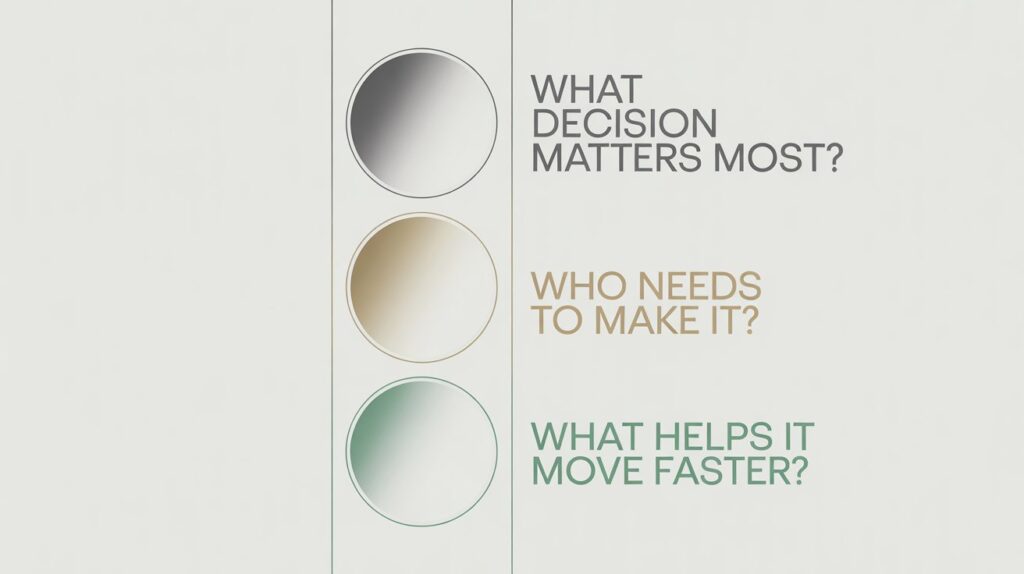
The Founder’s Decision That Matters Most
Identifying Your Core Marketing Goal
When marketing feels heavy, it’s usually because you’re trying to solve too many problems at once.
More visibility. More leads. Better engagement. Higher conversions. Stronger brand authority. Customer retention. All of them matter. But not all of them matter right now.
As a founder, your job is not to improve everything at the same time. Your job is to decide what moves the business forward in this season.
So pause and ask yourself a simple question:
What is the most important outcome for the next 60–90 days?
If cash flow feels tight, your priority might be qualified lead generation.
If leads are coming but not converting, the focus may be sales messaging and conversion optimisation.
If you’re unknown in your space, building authority and visibility might be the real objective.
Clarity begins when one goal becomes primary.
Once that goal is defined, everything else becomes easier to filter. Opportunities that don’t support it can wait. Activities that distract from it can be removed. Team efforts can align around it.
You don’t need a complicated marketing strategy. You need one clear direction. When the core goal is defined, overwhelm reduces naturally.
Making Decisions That Reduce Overwhelm
Once your core marketing goal is clear, the next step is simplification.
Big goals feel intimidating. But progress doesn’t require massive action. It requires focused action.
Let’s say your priority is lead generation. Instead of redesigning your entire brand or launching five campaigns, choose one high-impact move. Improve your landing page headline. Strengthen your offer. Launch one targeted paid campaign. Reach out to your warm network with a clear message.
Small, strategic actions create traction faster than scattered effort.
Each decision should answer one question:
Does this directly support my main objective?
If the answer is no, it can wait.
This approach protects your time and energy. It also improves measurement. When you focus on fewer initiatives, you can actually track performance, adjust messaging, and optimise results. Data becomes clearer because variables are reduced.
Over time, disciplined decision-making builds confidence. You stop reacting emotionally to slow days or low engagement. Instead, you adjust strategically.
Marketing overwhelm decreases when decisions become intentional. Fewer priorities. Clear execution. Consistent refinement.
That’s how momentum is built, steadily, not frantically.
Who Should Make Marketing Decisions
Empower the Right Person
One of the hidden reasons marketing feels overwhelming is this: you’re trying to control every detail.
You review every caption. Approve every design. Rewrite every email. Check every ad. At first, it feels responsible. Over time, it becomes exhausting.
Not every marketing decision requires founder-level attention.
Execution-level tasks by posting content, scheduling emails, designing graphics, monitoring analytics can be handled by someone trained and aligned with your brand voice.
When you empower the right person, you don’t lose control. You gain capacity.
The key is clarity, not micromanagement.
Define your positioning clearly. Communicate your audience profile. Explain your growth objective. Once those foundations are set, your team can execute within that direction confidently.
Delegation is not about stepping away from marketing. It’s about stepping away from operational noise. When your team owns the “how,” you can focus on the “why” and “where.”
Founder-led growth doesn’t mean founder-does-everything growth. It means the founder sets direction while others support delivery.
That shift alone reduces pressure more than any new strategy ever could.
When the Founder Must Step In
There are decisions you should never fully outsource.
Anything that shapes positioning, brand perception, pricing strategy, core messaging, or marketing investment requires your involvement. These choices influence long-term growth and cannot be based only on trends or short-term data.
For example, choosing your primary target audience is a founder-level decision. Adjusting your value proposition is a founder-level decision. Allocating budget to paid ads versus organic content is a founder-level decision.
Why?
Because these decisions affect risk, reputation, and revenue direction.
Your team can optimise campaigns. They can test creatives. They can improve open rates and engagement metrics. But the strategic direction must come from you.
When you’re clear about this boundary, stress reduces. You stop feeling responsible for every minor task while staying fully responsible for vision and alignment.
Strong marketing systems operate this way:
The founder protects clarity.
The team drives execution.
When those roles are defined, growth becomes structured instead of chaotic.
Tools to Make Decisions Faster
Use Simple Metrics, Not Complex Dashboards
One of the fastest ways to feel overwhelmed in marketing is to open a dashboard full of numbers you don’t fully understand.
Clicks. Impressions. Reach. Engagement rate. Bounce rate. Session duration. Cost per click. Cost per mille. The list keeps growing. When you try to track everything, you end up confused instead of informed.
As a founder, you don’t need more data. You need the right data.
Ask yourself: what actually impacts revenue?
Leads generated. Conversion rate. Sales closed. Customer acquisition cost. Retention rate. These are growth metrics. They tell you whether your marketing strategy is working or not.
Everything else is supporting information.
For example, high social media reach looks impressive, but if it doesn’t bring qualified leads, it’s not moving the business forward. A spike in website traffic feels exciting, but if conversions stay flat, the real issue hasn’t been solved.
Simple tracking creates faster decisions. When you focus on meaningful marketing metrics, patterns become visible. Adjustments become logical. Guesswork reduces.
Clarity in data leads to clarity in action. And clarity removes unnecessary stress from marketing decisions.
Ask Questions That Clarify Priorities
Before you approve a campaign, launch a new channel, or invest in another tool, pause.
Instead of asking, “Is this trending?” ask, “Does this directly support my main business goal?”
This single shift changes everything.
If your focus is lead generation, then the question becomes: will this activity increase qualified enquiries?
If your focus is conversion optimisation, ask: will this improve buyer confidence and reduce friction?
If your goal is brand authority, ask: will this strengthen positioning in the market?
Clear questions eliminate emotional decisions.
Founders often react to urgency. A competitor launches something. An algorithm changes. A marketing email promises fast growth. Without structured thinking, you respond quickly and adjust direction again.
But when every decision must pass through a simple filter: Does this move us closer to our core objective? Because distractions lose power.
A consistent questioning framework creates discipline. Discipline creates focus. Focus creates measurable growth.
Marketing becomes lighter when decisions are intentional instead of reactive.

Focus Beats Intensity
The Power of Doing Less Well
It’s easy to believe that growth comes from speed and volume.
Post more. Launch more. Build more funnels. Run more ads. Send more emails.
But intensity without direction creates exhaustion, not results.
When you spread your energy across too many marketing channels, quality drops. Messaging becomes inconsistent. Execution becomes rushed. And your audience feels that lack of clarity immediately.
One strong, well-written email that speaks directly to your ideal client will outperform five generic campaigns.
One conversion-optimised landing page will generate more leads than multiple unfinished ones.
One platform where you show up consistently builds more authority than being half-present everywhere.
Focused marketing builds trust because it feels intentional. Your audience understands what you stand for. They see repetition in your message. They recognise your positioning.
Growth is not about being loud. It’s about being clear.
When you reduce the number of active priorities, your thinking sharpens. Your team performs better. Your brand voice strengthens.
Doing less but doing it properly creates stability. And stability is what sustainable business growth is built on.
Building Sustainable Marketing Systems
Short bursts of effort can create temporary spikes. But they rarely create predictable revenue.
Sustainable marketing is built on rhythm, not rush.
When your team knows the primary goal for the quarter, the key marketing channel, and the core message, everything becomes structured. Weekly actions align with long-term strategy. Campaigns build on previous campaigns. Data informs gradual improvement instead of sudden changes.
Consistency produces compounding results.
For example, publishing valuable content regularly improves search visibility over time. Refining paid ads steadily reduces acquisition cost. Improving email sequences gradually increases conversion rates. These improvements may feel small week to week, but they accumulate.
Random activity, on the other hand, resets progress repeatedly.
A sustainable marketing system answers three questions clearly:
What are we focusing on?
How are we measuring success?
What are we improving next?
When those answers stay stable, stress reduces. Decision-making becomes faster. Revenue becomes more predictable.
Intensity burns energy. Systems build businesses.
Making Marketing Easier Every Day
Stop Chasing Every New Advice
Marketing advice is endless. Scroll for five minutes and you’ll see someone recommending a new platform, a new funnel strategy, a new content formula, or a new automation tool. Every expert sounds convincing. Every method claims fast growth.
The problem is not the advice. The problem is trying to apply all of it.
When you constantly consume new marketing strategies without filtering them, your direction shifts weekly. Your messaging changes. Your priorities reset. Your team feels confused. And you feel behind.
Strong marketing clarity comes from commitment, not constant adjustment.
Before adopting any new tactic, ask yourself: does this align with my current growth stage, my target audience, and my primary business objective? If it doesn’t clearly support those areas, it can wait.
Not every good strategy is right for you right now.
When you stop chasing every new idea, your thinking becomes calmer. You protect your time. You preserve your energy. And you allow your existing strategy to mature.
Discipline in marketing is more powerful than excitement. Focus creates results. Noise creates stress.
Create a Weekly “Focus Check”
Overwhelm often builds because there’s no structured pause to think.
Instead of reacting daily, create one consistent weekly habit. Block 30 minutes. No distractions. No scrolling. Just strategic thinking.
Ask one simple question:
What are the one or two actions that will create the most impact this week?
Not ten tasks. Not a full rebrand. Just one or two meaningful moves.
Maybe it’s refining your offer messaging.
Maybe it’s optimising your website conversion flow.
Maybe it’s launching a targeted lead generation campaign.
Maybe it’s nurturing existing leads through a structured email sequence.
When your weekly marketing priorities are narrow, execution improves. Completion rates increase. Confidence builds.
This rhythm creates stability. Your team knows what matters. You stop second-guessing daily decisions. Progress becomes visible.
Marketing becomes easier not because you’re doing less work, but because you’re doing the right work.
Small, focused weekly actions compound into predictable, founder-led growth.