
The Simple GTM System Every Founder Needs
Hey founder, let’s be honest, growing a business can feel messy. One day you’re excited about your product, the next day, you’re wondering why nobody seems to care. It’s not because your idea is weak or you’re not working hard. The real reason is simple: your go-to-market strategy isn’t clear.
Most founders jump straight into marketing, posting on social media, running ads, sending emails, hoping something sticks. But without a simple system, it’s like throwing darts blindfolded. You get some hits, many misses, and a lot of wasted energy.
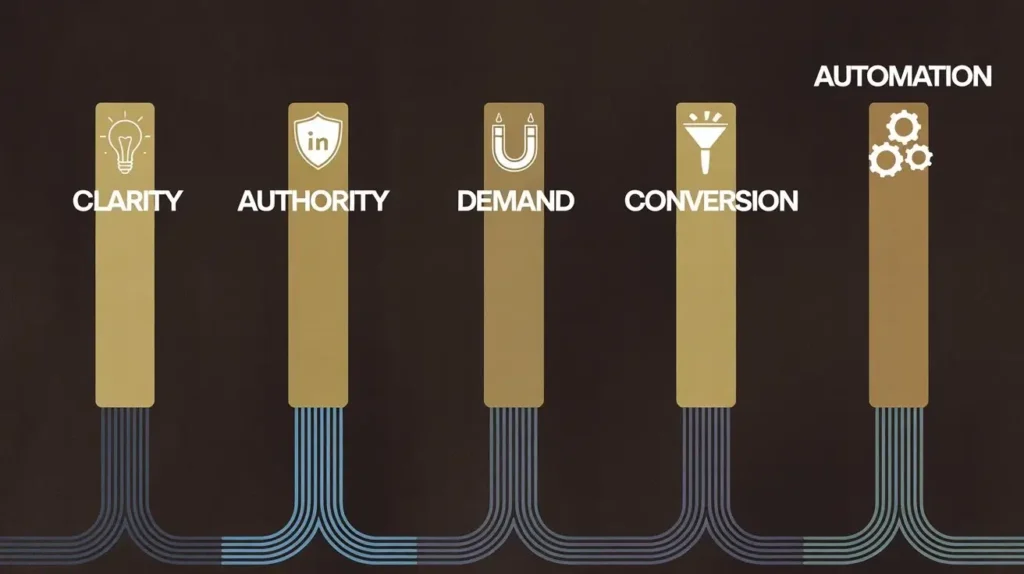
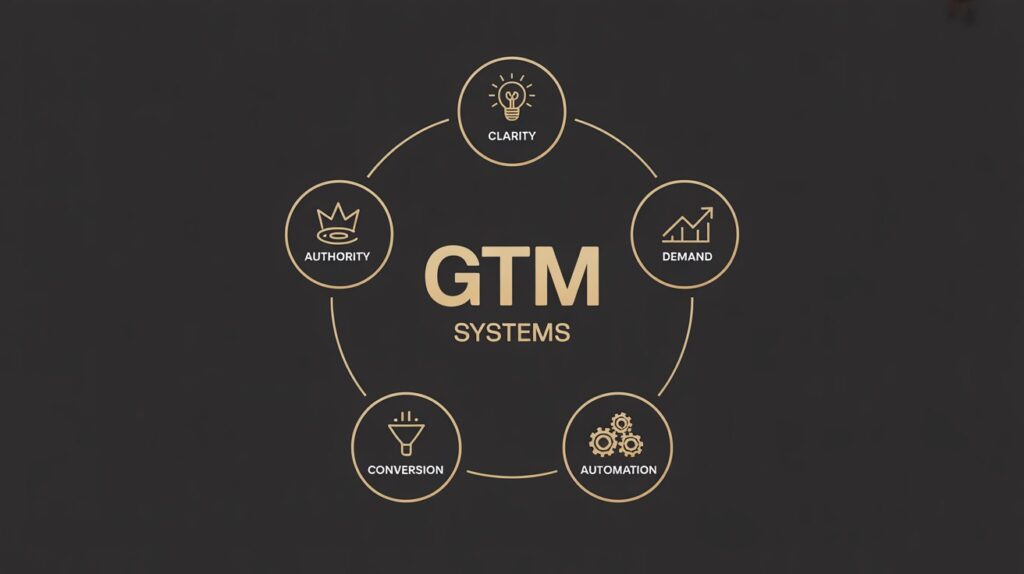
Here’s the good news: you don’t need complex funnels, expensive tools, or a huge team to get consistent results. You need a clear framework, a roadmap that shows you exactly what to do, in the right order. That’s where the 5-pillar GTM system comes in. It starts with clarity and moves all the way to automation, making your growth predictable instead of random.
By the end of this guide, you’ll see how to attract the right audience, build trust fast, and convert interest into clients without overwhelm. Ready to simplify your growth? Let’s dive in.

Why Most Founders Struggle with Go-To-Market
The Real Reason Growth Feels Inconsistent
Most founders I talk to work hard, try new ideas, and still feel stuck. One month they see a few leads, the next month nothing. It’s frustrating, and you start doubting yourself. But here’s the reality: the problem isn’t your effort, it’s your system.
Growth feels inconsistent because there’s no clear roadmap guiding your actions. Without a structure, every task becomes a random experiment. You post content, run ads, or send emails, but nothing connects in a meaningful way. Your audience doesn’t follow a clear path to become paying clients.
Another reason is scattered messaging. If your audience can’t quickly understand who you are, what problem you solve, and why they should trust you, they move on. Even if your product is great, unclear communication stops growth before it begins.
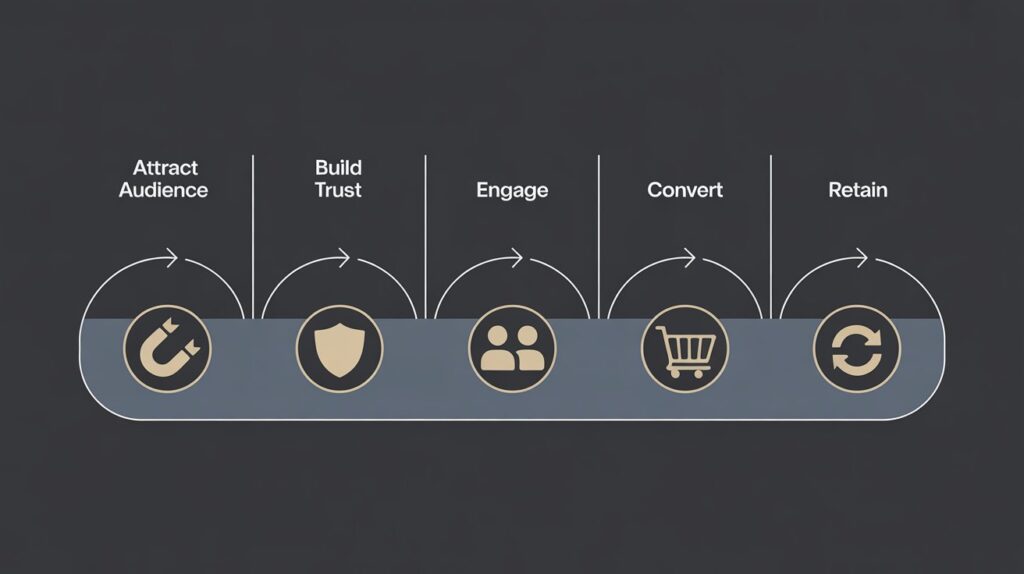
The key is a repeatable system that consistently attracts, engages, and converts the right people. When every step is intentional, leads stop being random, and your business starts to grow predictably. Consistency doesn’t come from working harder, it comes from working smarter with a framework that turns chaos into clarity.
Why More Marketing Doesn’t Fix the Problem
Here’s a common trap: founders think posting more content, running more ads, or sending more emails will solve slow growth. It doesn’t. More marketing without a system is like shouting louder in a crowded room, people still won’t notice.
The problem isn’t effort, it’s direction. Random marketing creates noise, not connection. Your audience sees messages, but they don’t understand the value, trust you, or know the next step to take. That’s why campaigns fail even with huge effort or budget.
Instead of more marketing, you need a structured approach. Every action should move your audience closer to understanding, trusting, and engaging with your business. That means clear messaging, targeted content, and a predictable path from curiosity to client.
Think of it like building a house. Marketing is the paint and decorations, but without a solid foundation and framework, it won’t stand. More marketing is just more paint, it can’t fix the cracks in your strategy. Focus on a simple, repeatable GTM system, and suddenly your campaigns will stop being random, they’ll start converting consistently.
What a Simple GTM System Actually Looks Like
Moving from Random Actions to a Clear System
Most founders take action, but it often feels like spinning wheels. One day you post on social media, the next day you run an ad. Some days it works, most days it doesn’t. This randomness creates stress, wasted time, and uncertainty.
The secret is switching from random actions to a clear system. A system gives structure to your efforts. Every post, email, or campaign has a purpose. You know exactly what to do to attract the right audience and move them closer to becoming clients.
A clear system starts with understanding your five pillars. Clarity helps your audience know who you are. Authority builds trust. Demand attracts attention. Conversion turns interest into clients. Automation saves time. When these pillars work together, you stop guessing and start executing with confidence.
Once you adopt a structured system, work feels lighter. Instead of chasing trends or reacting to what seems popular, every action has meaning. Leads stop coming randomly. Growth becomes predictable. You feel more in control, and your business begins to scale without extra effort.
How a Structured Approach Drives Predictable Results
Random marketing can feel exciting at first, but results are inconsistent. One week leads show up, the next week nothing. That inconsistency frustrates founders and wastes effort.
A structured approach changes everything. When you follow a clear plan, each action connects to the next. You know what to do to attract the right people, build trust, and convert them into clients. No more guessing. No more hoping.
Predictable results come from repeating the same steps with small improvements. Posting content, sending emails, or running ads only works when it fits into a system designed to guide your audience from curiosity to purchase. Every step matters and leads naturally to the next.
A structured system also saves mental energy. You stop deciding what to do every day. You focus on executing the plan. As a result, leads start showing up consistently, conversions increase, and growth becomes measurable.
This is why the best founders focus on building the system first. Marketing alone does not create results. A structured approach ensures your efforts produce predictable, reliable growth over time.
Pillar 1: Clarity – The Foundation of Everything
Defining Your Message So People Understand Instantly
Most founders make one big mistake. They assume their audience knows what they do or why it matters. The truth is people decide in seconds whether to pay attention. If your message is confusing, vague, or full of jargon, they scroll past and forget you even exist.
Defining your message clearly is about simplicity. Focus on the problem you solve, the results people get, and why you are different. Use words that anyone can understand. Imagine explaining your business to a friend over coffee. If they get it immediately, your message is clear.
Your message should answer three questions: Who is this for? What problem does it solve? Why is it the best choice? When your audience sees this instantly, trust builds naturally. They feel like you understand their situation and can help.
A strong, clear message also guides your marketing. Every post, email, or ad aligns with it. You stop guessing what to say and start speaking directly to the people who matter. Clear messaging is the first step to attracting attention, engaging your audience, and turning curiosity into action.
Identifying Your Ideal Audience (Who Actually Converts)
Not everyone is your customer and that is okay. Many founders waste time trying to sell to everyone. The result is low engagement, random leads, and slow growth. The smart approach is to focus on the people who truly benefit from what you offer.
Start by defining the characteristics of your ideal audience. Consider demographics, interests, pain points, and motivations. Think about who struggles most with the problem you solve. These are the people who are ready to take action when they see your solution.
When you know your ideal audience, every action becomes more effective. Content feels relevant, messages connect, and your marketing efforts generate real leads. You stop chasing random people and start attracting the ones who convert.
This focus also saves time and energy. Instead of spreading yourself thin, you put effort where it matters most. Your campaigns become sharper, your messaging resonates, and results become predictable. Knowing exactly who you are talking to is the difference between scattered effort and consistent growth.
Pillar 2: Authority – Building Trust Before You Sell
Creating Content That Positions You as an Expert
Authority is what makes people trust you before they even talk to you. Most founders think authority comes from years of experience or big clients. The truth is, authority is built every day through the content you share and the value you give.
Start by creating content that shows your knowledge without sounding boastful. Share tips, insights, and lessons from your own experience. Solve problems your audience cares about. When people see helpful advice that works, they begin to see you as an expert.
You don’t need long, complicated posts. Short, clear, and practical content works better. Videos, LinkedIn posts, emails, or even simple guides can show that you know your stuff. The goal is consistency. Every helpful piece of content builds trust and positions you as someone worth listening to.
Remember, authority is not about impressing everyone. It is about connecting with the people who need your solution. When your content speaks directly to them, they feel understood and confident that you can help. Building authority sets the stage for demand, conversions, and long-term growth.
Showing Proof Without Needing Big Case Studies
You don’t need a portfolio of big clients to show credibility. Proof can come in simple, authentic ways. Testimonials, small wins, before-and-after examples, or even insights from your own journey can build trust.
People respond to real, relatable evidence. A short story about how you solved a problem, helped someone, or achieved a result resonates more than complex reports or massive case studies. Small wins are proof that you can deliver.
Even your process can be proof. Sharing step-by-step approaches, tips, or frameworks shows that you have a method that works. When your audience sees that method applied, they trust you more.
Remember to be authentic. Don’t exaggerate or create fake stories. Honest, transparent examples create credibility faster than anything else. Showing proof in simple ways reassures your audience that they are making the right choice. Authority is about trust, and trust is the foundation for conversion and long-term business relationships.
Pillar 3: Demand – Attracting the Right People Consistently
Turning Content Into Inbound Interest
Content is powerful, but only if it attracts the right people. Many founders create content, but it doesn’t bring leads. The secret is creating content that speaks directly to your audience’s problems and desires.
Start by understanding what keeps your ideal customers awake at night. Then create content that addresses those pain points and shows solutions. Every post, video, or email should answer a question, solve a problem, or give actionable advice. When your content is helpful and relevant, people come to you instead of you chasing them.
Use calls to action naturally. Invite readers to download a guide, join a community, or book a call. This turns interest into inbound leads. Over time, as you consistently share value, your audience starts seeing you as the go-to expert.
Remember, inbound interest is about building relationships, not pushing sales. When your content genuinely helps, people trust you, engage with your business, and are more likely to convert. Your content becomes a magnet, pulling the right people to your services instead of you running after them.
Simple Ways to Stay Visible Without Burnout
Staying visible doesn’t mean working non-stop. Many founders burn out trying to post every day without a plan. The trick is consistency with strategy, not volume.
Batch your content. Plan a week or month in advance, create posts in one session, and schedule them. This saves mental energy and ensures your audience sees you regularly.
Repurpose content across channels. A LinkedIn post can become an email, a short video, or a carousel. This maximizes reach without doubling work.
Engage strategically. Comment on relevant posts, share helpful insights, and participate in conversations your audience cares about. You stay visible without overloading yourself.
Focus on quality, not quantity. Even a few well-thought-out posts each week will build demand if they solve problems and resonate with your audience. Staying visible consistently creates trust, recognition, and opportunities, all without burning you out.
Pillar 4: Conversion – Turning Interest into Clients
Why Most Leads Don’t Convert and How to Fix It
Many founders attract leads but struggle to turn them into clients. You get interest, messages, or downloads, but few people take the next step. The problem isn’t your product. It’s how leads experience your business.
Most leads don’t convert because they aren’t guided clearly. They might like your content or download your guide, but they don’t know what to do next. Confusing processes, delayed follow-ups, or weak calls to action make them drop off.
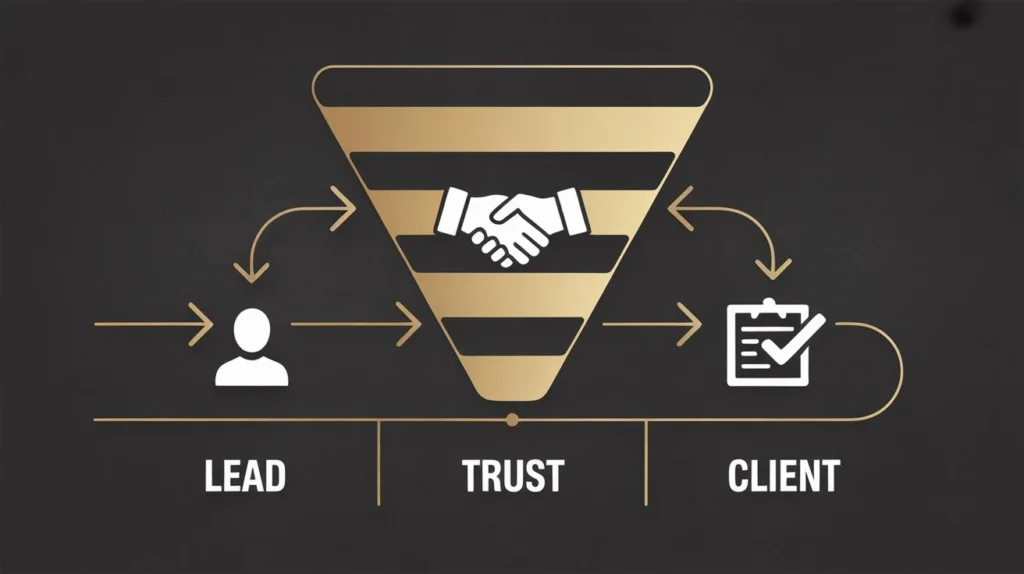
The fix is simple. Make the path from interest to client obvious. Tell them exactly what to do next, respond quickly, and show the benefits of taking action. Personal touch matters. A message, call, or email at the right time increases trust and conversions dramatically.
Also, focus on small wins. Don’t overwhelm your leads with too much information or options. Show them the easiest, fastest way to get results from your product or service. Clear steps, timely guidance, and relevant value turn casual interest into paying clients. Conversions are not magic. They happen when your leads feel confident and guided.
Building a Simple Funnel That Actually Works
A funnel does not need to be complicated. Many founders overthink it, creating long sequences, multiple steps, or expensive tools. Simple works better, especially when starting out.
A strong funnel starts with awareness. Attract the right audience through helpful content. Next, engage them with value that builds trust. This could be a guide, video, or email series that solves a real problem. Then, invite them to take action, like booking a call or trying a service.
The key is clarity and consistency. Every stage should flow naturally to the next. Your audience should never feel lost or confused. Keep steps minimal and clear so people move forward without hesitation.
Measure and tweak. Look at what works, remove what doesn’t, and keep improving. Over time, your simple funnel generates predictable leads and conversions. The right system turns interest into paying clients without complicated processes or stress.
Pillar 5: Automation – Scaling Without Overwhelm
Systems That Save Time and Increase Consistency
As your business grows, doing everything manually quickly becomes exhausting. Posting content, sending emails, and following up with leads every day can feel overwhelming. That is where systems come in.
A system is a repeatable way of doing tasks so nothing falls through the cracks. For example, you can have a schedule for content creation, templates for emails, and checklists for client follow-ups. When you do things the same way every time, you save mental energy and reduce mistakes.
Consistency is the other benefit. Leads and clients notice when you are reliable. Posting regularly, following up on time, and keeping your messaging aligned makes you look professional and trustworthy.
The best systems are simple. Start small with the most repetitive tasks and gradually expand. Even one organized workflow can free hours each week and create predictable results. Over time, systems allow you to scale your business without working more hours. You work smarter, not harder, and growth becomes sustainable.
When and How to Introduce Automation Tools
Automation tools can be game changers, but many founders introduce them too early or in the wrong way. The key is timing. Wait until you have repeatable tasks and a clear workflow. If your process is messy, automation only amplifies confusion.
Start by identifying tasks you do over and over. It could be scheduling posts, sending welcome emails, or tracking leads. Once these are clear, choose simple tools to handle them. You don’t need expensive software to start. Free or low-cost tools can save hours every week.
Introduce automation gradually. Test each step and make sure it works smoothly. Automation should make life easier, not create new problems. The goal is to maintain a personal touch while reducing repetitive work.
When done right, automation keeps your business visible, consistent, and responsive, without burning you out. You can focus on strategy, growth, and helping clients while systems handle the routine work. This is how scaling becomes realistic and stress-free.
Conclusion: From Clarity to Conversion Made Simple
Growing a business does not have to feel overwhelming. The problem most founders face is not effort but direction. Random actions, scattered messaging, and chasing leads without a plan waste time and energy. That is why a simple GTM system works.
By focusing on the five pillars: Clarity, Authority, Demand, Conversion, and Automation, you create a clear path from attracting the right audience to turning interest into clients. Clarity ensures your message is understood instantly. Authority builds trust before you even ask for a sale. Demand attracts attention consistently. Conversion turns interest into real results. Automation scales your efforts without adding stress.
Each pillar works together to make growth predictable and manageable. You don’t need complicated funnels, expensive tools, or endless marketing. You need a system that guides your audience, builds trust, and delivers results step by step.
Learn more about how we approach growth strategy
If you are ready to stop guessing and start growing with confidence, it’s time to take action. Let’s simplify your strategy, attract the right clients, and build predictable growth together.
👉 Book a strategy call today and turn your ideas into consistent results.